The "process" of traditional crafts
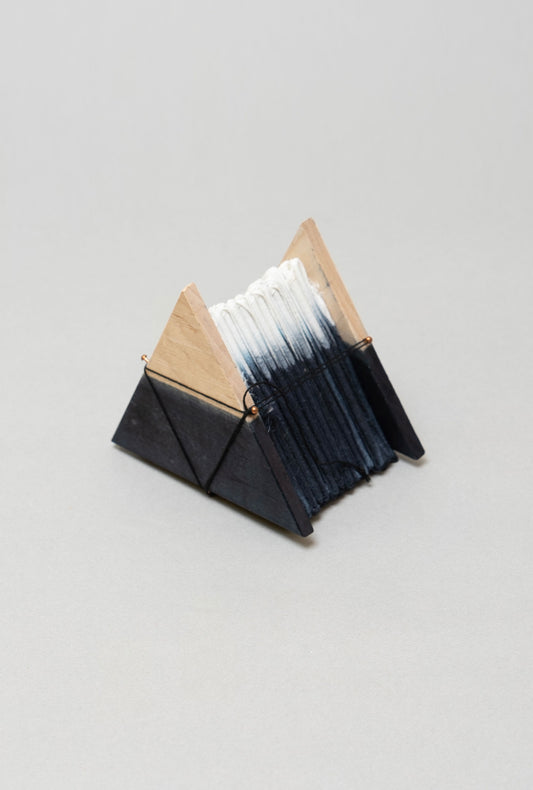
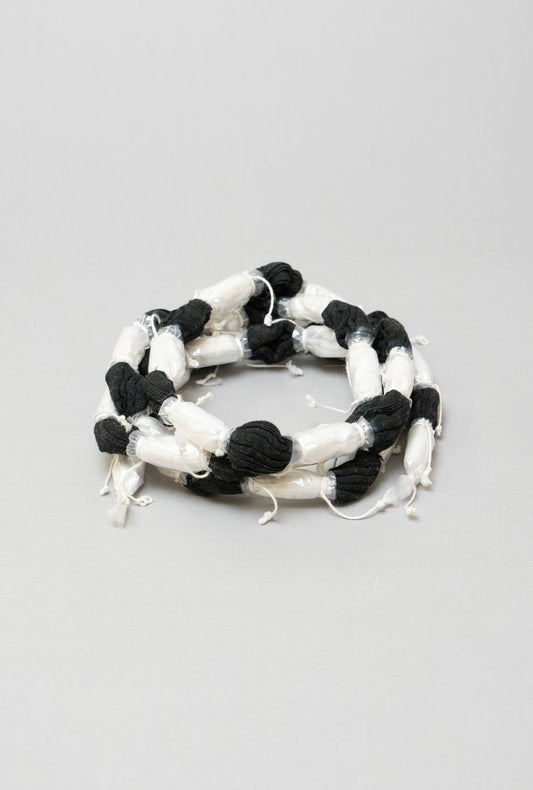
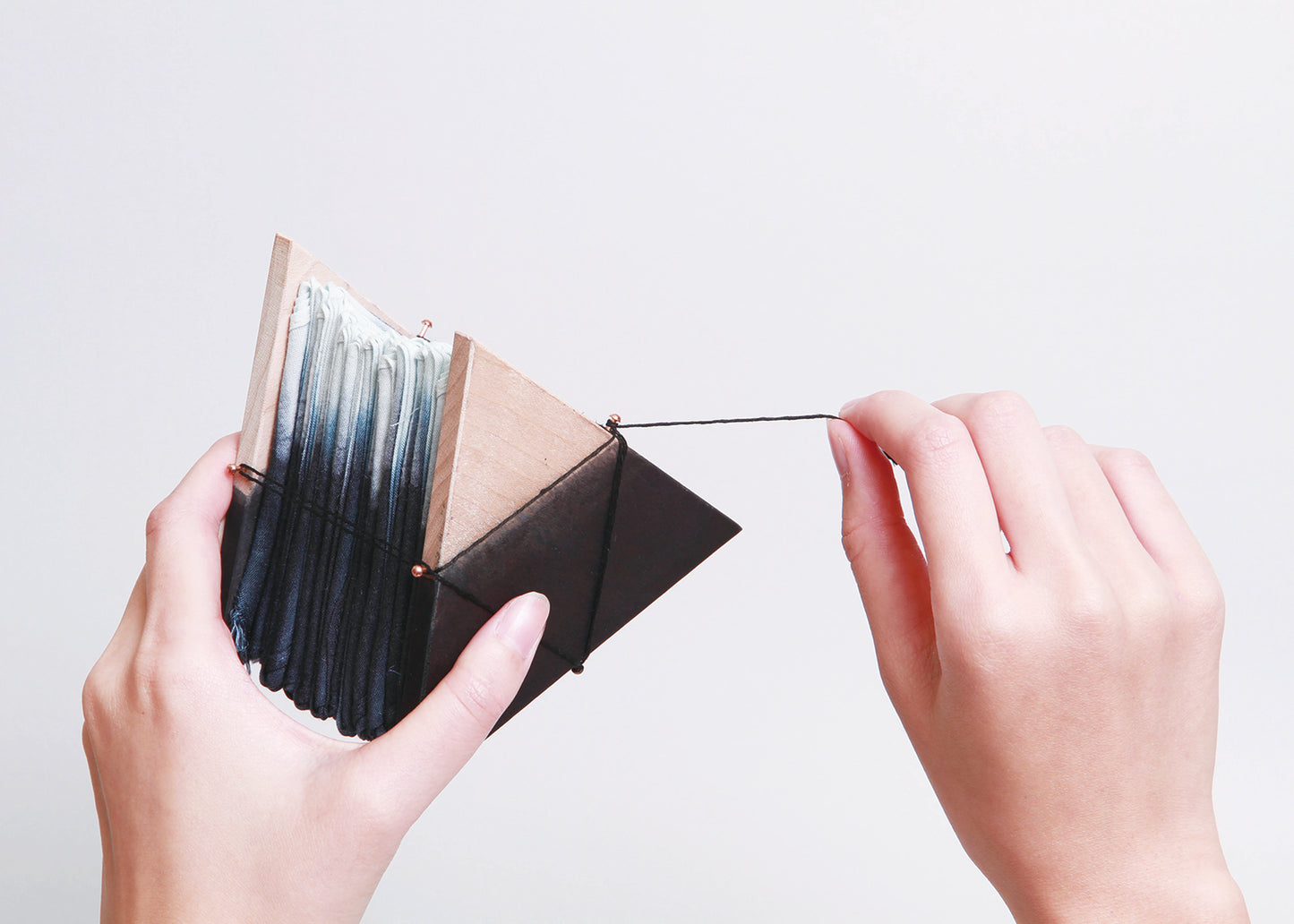
The "TOCHU" tie-dye scarf is a product born from the focus on the idea that "the process of craftsmanship is what’s interesting," captured at a stage "in progress" (tochu) before completion. It is not the artisan, but the user, who completes the TOCHU.
Untying the cords of this TOCHU offers the joy of opening a gift, while also providing a moment to experience tradition. Please enjoy the craftsmanship and the wisdom of the artisan.
Joint production with Tabata Shibori
Tabata Shibori / Est. 1979
TOCHU utilizes the technique of shibori dyeing. This is a dyeing method in which a pattern is created by binding or clamping parts of the fabric to resist the dye in those specific areas.
There are over 100 different techniques that fall under the term "dyeing." Each one involves completely different "processes (or 'tochu')" leading up to the final dye, and each piece is handcrafted with delicate artisan skill.
A collaborative production with the Kyo-Kanoko Shibori artisan "Tabata Shibori" (Mibu).

Miura shibori
"Miura shibori" is a tie-dyeing technique in which the fabric is plucked with the fingers or a needle and bound with thread one by one.
The areas bound with thread remain white as they resist the dye, creating a charming, raised polka-dot pattern.

Tesuji shibori
"Tesuji-shibori" is a tie-dye technique where fine pleats are made in the fabric, which are then carefully wrapped and bound with thread.
It is characterized by the delicate and vivid striped patterns that appear when the fabric is unfolded.

Itajime shibori
"Itajime shibori" is a technique that creates patterns by folding fabric, sandwiching it between square plates (templates), and then dyeing it. By dyeing only the outside of the square so that the dye does not penetrate to the center, it creates a grid pattern.

Snowflake shibori
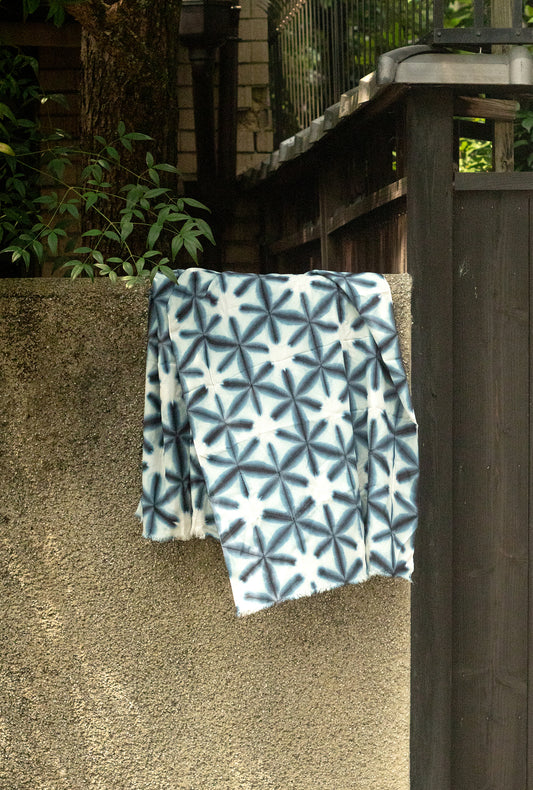
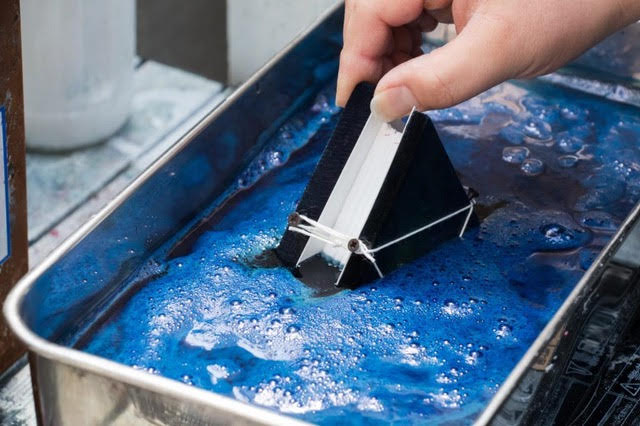
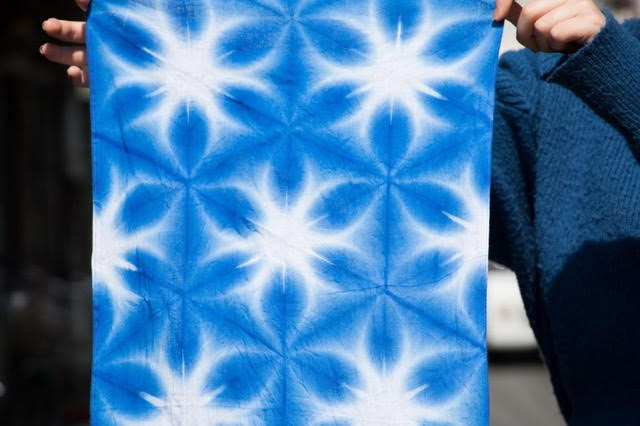
"Sekka-shibori" (snowflake tie-dye) is a technique for creating patterns by folding fabric, placing it between triangular boards (templates), and dyeing it.
Because of these triangular boards, the patterns produced by this technique look like snowflakes, which is why it is called "sekka" (snowflake).
By using dyes with coarser particles, the finish is not a sharply defined pattern, but rather a soft, blurred effect that gives the design a beautiful, fresh appearance.

Horizontal band tie-dye
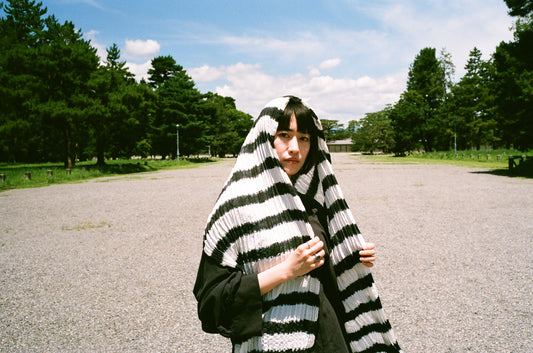
“Yokodan Shibori” is a technique in which fabric is folded into eighths (mountain and valley folds), threads are tied at equal intervals, and every other section is bound to resist the dye.
Because the stripes are created using the shibori technique, they don't have the perfectly straight appearance one typically associates with borders; instead, they possess a charming, slightly organic quality characteristic of shibori.
For yourself, and for the ones you love
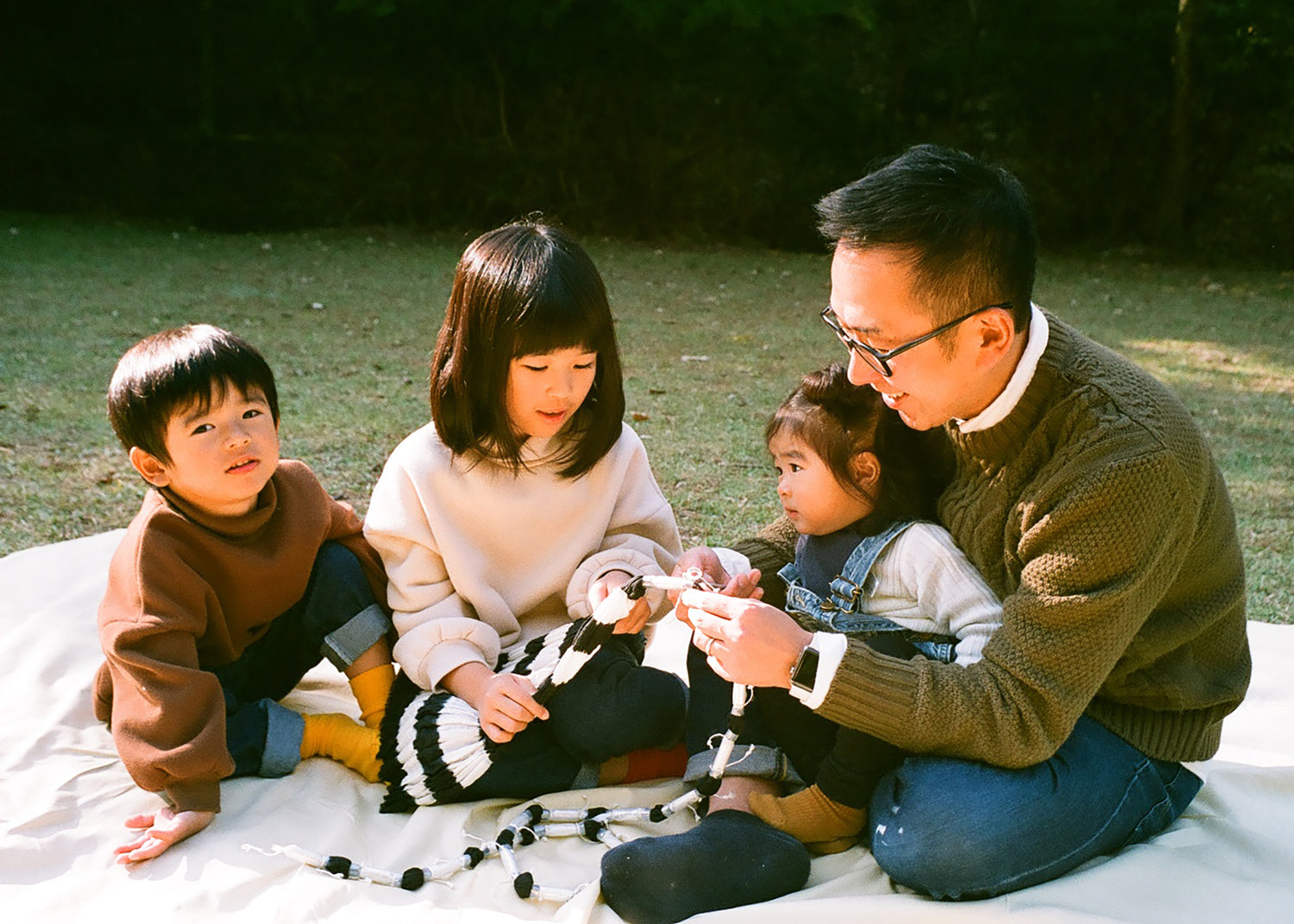
By unraveling TOCHU, you can experience the craftsmanship usually hidden from everyday life. Through the experience of completing the product yourself, it becomes a personal event, remaining in your memory as "a scarf that is uniquely mine."
Furthermore, the process of unraveling is akin to the excitement of opening a gift and wondering, "What's inside?" Whether for yourself or as a present, TOCHU becomes a special scarf.
-
TOCHU SEKKA-SHIBORI (tie‐dyed)_Stole
Regular price ¥1,098.00Regular price -
TOCHU SEKKA-SHIBORI (tie‐dyed)_Stole
Regular price ¥604.00Regular price -
TOCHU SEKKA-SHIBORI (tie‐dyed)_Stole
Regular price ¥1,098.00Regular price -
TOCHU SEKKA-SHIBORI (tie‐dyed)_Stole
Regular price ¥604.00Regular price -
TOCHU SEKKA-SHIBORI (tie‐dyed)_Stole
Regular price ¥1,098.00Regular price -
TOCHU SEKKA-SHIBORI (tie‐dyed)_Stole
Regular price ¥604.00Regular price -
TOCHU SEKKA-SHIBORI (tie‐dyed)_Stole
Regular price ¥1,115.00Regular price -
TOCHU SEKKA-SHIBORI (tie‐dyed)_Scarf
Regular price ¥462.00Regular price -
TOCHU YOKODAN-SHIBORI (tie‐dyed)_Stole
Regular price ¥1,393.00Regular price