Natsujiro shoten and Koginsashi | 03
Have you heard of Koginshi embroidery, a representative folk art of Aomori?
I didn't know that much.
Recent Kogin embroidery is stylish and cute.
With Natsujiro Shoten, the pioneer who created this "recent" trend
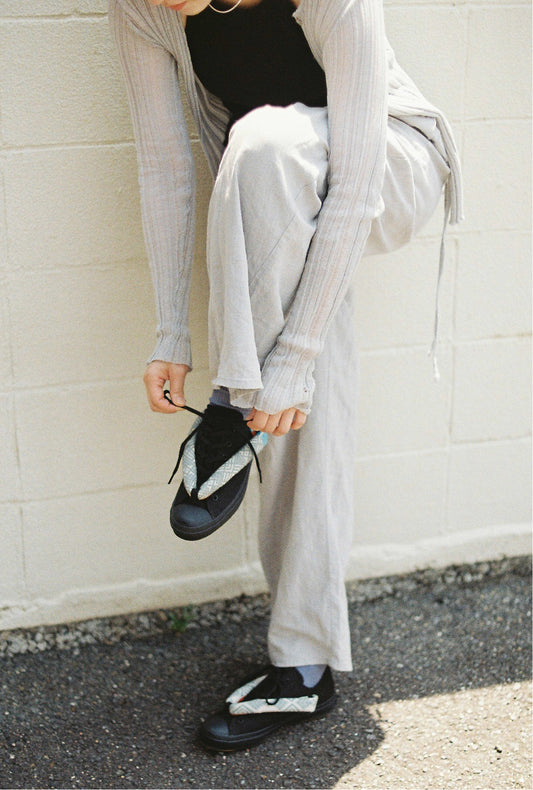
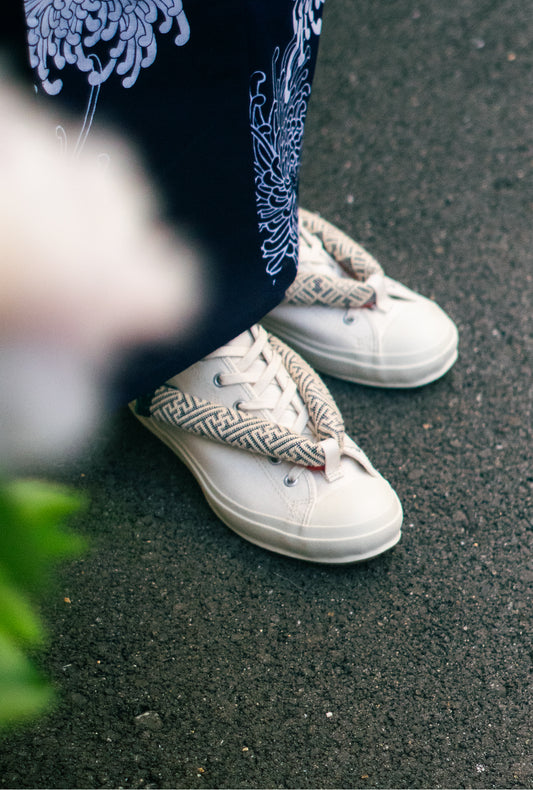
WLK's HANAO SHOES collaboration
So, I took this opportunity to go to Aomori.
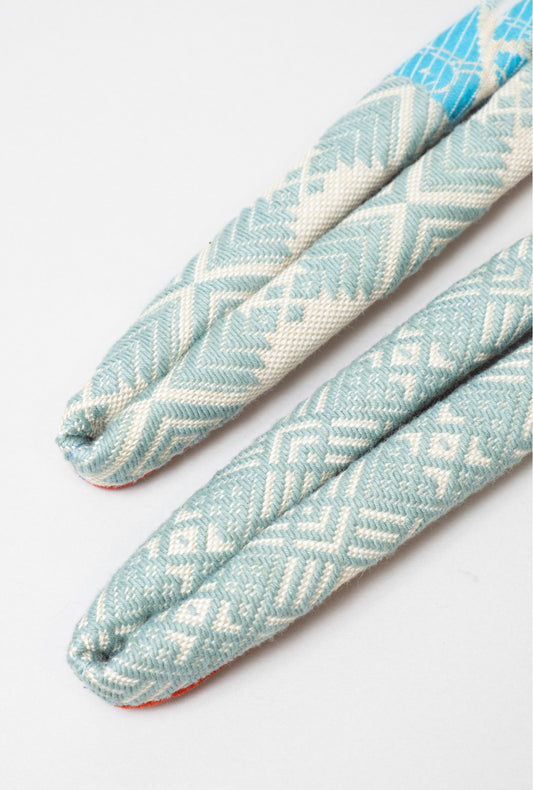
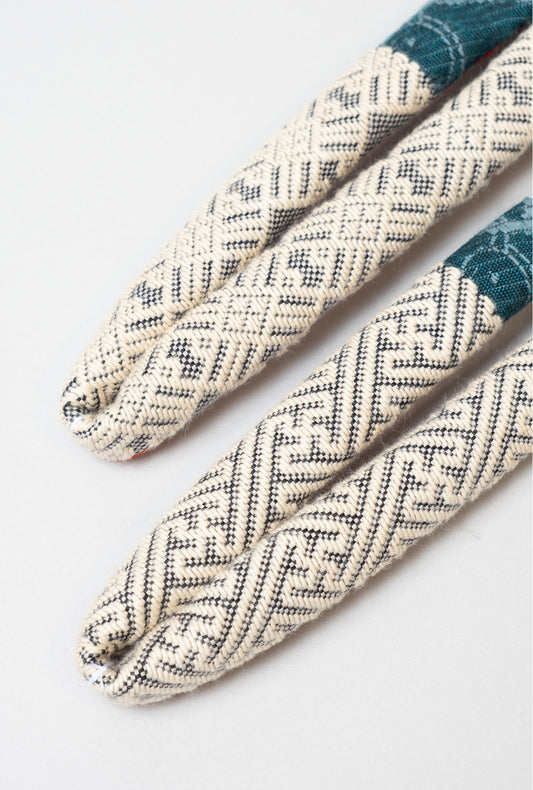
A project to attach Natsujiro's Kogin embroidered thongs to HANAO SHOES.
The venue is Gallery CASAICO in Hirosaki City.
It was cold, but it was worth the trip.
With Koginzashi artist Natsujiro (photos not allowed)
I will post the transcript of the talk here.
About Hirosaki, Kogin embroidery, Aomori's traditional industries, etc.
Natsujiro Shoten and Kogin Embroidery | 01
Learn "Koginzashi" at home in Aomori
Basic knowledge: The roots of Kogin embroidery.
It was a time when people would say, "This isn't Kogin embroidery."
Natsujiro Shoten and Kogin Embroidery | 02
After all, anyone can do embroidery.
Because it is made by specialists working together in a division of labor, added value can be added.
The reason for the thong and Natsujiro.
Natsujiro Shoten and Kogin Embroidery | 03
I didn't know about HAMAO SHOES.
I don't think of it as a craft, it's just that the means used was craft.
After the talk with Natsujiro
I didn't know about HAMAO SHOES.

Sakai:
You didn't know about HANAO SHOES, did you?
Natsujiro:
I didn't know that, but I've seen them selling thong caps, not HANAO SHOES.
Sakai:
Why?! Lol, they don't sell that anymore.
Natsujiro:
I thought thongs were only for the feet, so I was really impressed to learn that they could be attached to other parts of the body.
So I wondered if I could do something else, and together with the craftsmen, I attached a thong to a bag about the size of an iPad,
I made something that you can peel and hold by hand.
It was a really great influence.
I never thought I'd put it on a hat.
Sakai:
By the way, if you attach a child's thong to the back of the iPhone case, it becomes much easier to hold.
If you put it in an odd place, you might make some unexpected discoveries.
When we first started out in Kyoto, we were scared of what people would say if we made something so shoddy.
Natsujiro:
Is that so? Is that possible?
Sakai:
It is Kyoto after all.
It's a city where all the main streams of various crafts are present.
Natsujiro:
It's scary because it has such a big impact.
Sakai:
We are currently receiving support from tea ceremony teachers and others who have foot problems and would like to wear sandals but are unable to do so.
Natsujiro:
I saw it on Instagram and it goes well with kimonos too.
Even though they are shoes, the thongs stick out and peek out from under the kimono. I thought that was nice.
It's amazing because people of all ages are buying it.
I don't think of it as a craft, it's just that the means used was craft.

Sakai:
Oh, I forgot to mention that the body of the geta was made in collaboration with a Tsugaru lacquer artisan.
Natsujiro:
The geta themselves have always been made by a workshop in Hita City, Oita Prefecture.
Starting this year, we have a new design that is half octagonal and half round. It's called "Namokene."
Sakai:
Um, what's that?
Natsujiro:
It's "Naamokene."
Stretch it.
In Tsugaru dialect it's like "That's all right."
My grandmother's favorite phrase for both the thong cloth and "Ideva" is "That's nice," which is a light compliment.
So both the fabric and the sandals are original.
I think I'm the only one who has half Tsugaru lacquered geta.
I like designs that are abrupt, I like things that change suddenly.
Sakai:
What do traditional crafts, culture, and industry mean to you, Natsujiro?
Natsujiro:
I have nothing to do with the development of the craft or the spread of Kogin embroidery; the most important thing is that I do it because it's fun.
First of all, there are personal desires, such as wanting to wear something like this or wanting these geta.
If it's not fun, I can't continue.
The first novelty item we gave away when we made our thongs was that tenugui...

Sakai:
It's pretty cool.
Natsujiro:
I love Komodo dragons, so I had one drawn for me.
Eat the traditional thing that makes the Komodo dragon fall.
Sakai:
Is that what you meant?
Natsujiro:
It's in pieces inside Natsujiro's store,
It may sound a bit harsh, but they devoured the Natsujiro store and destroyed it.
The two that were born together in the womb were called Natsujiro's thong.
I don't really think about whether it has been used for a long time or whether it will be passed on to the next generation.
It's just an exhibition where I want you to enjoy what I find fun in the same way.
I don't think of it as a craft, it's just that the means used was craft.
Sakai:
I'm extremely particular about it though.
Just saying that. Lol
Natsujiro:
I'm passionate about Kogin embroidery, but I also love Aomori.
It will be a little expensive.
I hope that people who are okay with that will wear them.
This year's exhibition is packed with even more sneakers.
Are these sneakers made with a focus on white?
Sakai:
I'm particular about domestically produced sneakers.
In fact, BEAMS previously worked with us to create HANAO SHOES, which allow you to change the thongs.
This was planned by BEAMS as merchandise for the movie Tora-san.
It would be nice if Natsujiro's thongs could be replaced as well.
Natsujiro:
surely.
My name "Natsujiro" comes from "Tora-san."
Because I love Tora-san.
Sakai:
Really? That's amazing then.
If you go abroad wearing HANAO SHOES, you'll be approached by a lot of people.
Natsujiro:
I think so.
When I first put the thong and canvas together I was surprised at how good it looked.
Embroidery can be a bit intimidating, so I was a little worried at first, but I realized it wasn't that bad.
Sakai:
Is there anything new you're thinking about going forward?
Natsujiro:
Going forward, I'd like to increase the number of fabric colors, but I'm not sure what else to do next.
It's my first year with the new fabric, so I'm still not used to it, so I'm getting used to it.
Recently, I've been getting approached by a lot of foreigners on Instagram, so I've been thinking that I need to expand my size range.
Also, children's geta sandals are so cute.
Everyone says they don't need it because they'll grow out of it quickly.
Sakai:
Children outgrow their shoes too quickly.
Parents can't afford to spend money on their children's shoes.
There's nothing I can do about it.
Natsujiro:
But the little thongs are so cute, it's not a thong hat,
I wish I could use the thong for other things.
Sakai:
I'll think about the products we can create together with Natsujiro.
Sakai:
Yes, is this okay?
That's great. An interview.
Natsujiro:
I can't really have a meaningful conversation either.
Sakai:
It was a very meaningful talk.
Natsujiro:
I'm glad to hear you say that.
Every time I interviewed him, he always tilted his head.
Sakai:
Lol. I often feel like interviewers don't know anything.
Every once in a while, I come across someone who really gets it, and it's fun.

After the talk with Natsujiro
I think I forgot to ask the main question: what is it about Koginzashi that she likes so much about it and that makes her choose to do it as a job?
People love to create, to create and leave something behind.
I like going to the beach, digging holes on the beach, and building mountains and castles.
So I think everyone can understand to some extent the feelings of people who are hooked on the easy embroidery craft known as "Koginzashi."
It must be a joyful feeling when you move your hands mindlessly and suddenly realize that a pattern has been created.
But it doesn't have to be Kogin embroidery; knitting, lacquering, or woodworking would also be fine.
Why was Natsujiro a "Kogin"?
I should have asked him more about what he thought he found attractive about her.
I'll ask next time we meet.
Yosuke Sakai
Natsujiro Shoten Instagram:
@kogin_natsujirou
Gallery CASAICO Instagram:
@casai